
Stamford Previous Residents by Era
No single Stamford record covers every household or every year. Use the present parcel to set the address, a deed index to establish title changes, directories and census schedules to locate households, and local history sources to explain a street that moved or changed name.
| Source | Years It Covers | Where Held | What It Shows |
|---|---|---|---|
| Stamford Vision assessor parcel | Current and recent valuation data | Stamford Vision portal | Situs, owner, mailing block, PID, MBLU, sales and book/page |
| Stamford SearchIQS land records | Index 1967-07-03 to 1997-12-31; images and index from 1997-12-31 | Town Clerk SearchIQS and vault | Grantor, grantee, deeds, mortgages, liens, maps and prior references |
| Stamford map index | 1835-12-16-present | Town Clerk land records | Maps and surveys that can preserve lot and street context |
| General Index Land Records Stamford | 1641-1900 | Marcus Research Library, RG-15 | Older names and legal land transactions before the modern portal |
| Stamford directories | 1872; 1879-1916; microfilm 1879-1966 | Ferguson Stamford Room and History Center | Names, address forms, household clues, and business roles |
| Boyd’s Fairfield County directory | 1881-82 printed run | Internet Archive scan | Stamford names, trades, residences, landmarks, and household marks |
| Stamford federal census | 1790-1950, released after the 72-year rule | NARA, library databases, and archive copies | Household members and address fields by enumeration year; 1890 is a major gap |
| Stamford Sanborn maps | 1896, 1906, and 1929 references | Library of Congress and Stamford History Center | Buildings, uses, street names, blocks, and physical change |
| House surveys | Survey dates vary by collection | Stamford History Center Marcus Library | Earlier owners, photos, structures, and research-file leads |
| Obituary and probate records | Obituary index from 1830; probate start not stated | Ferguson, NewsBank, and Stamford Probate District | Death, family, estate, and heir clues that can close a past-resident trail |
The Stamford years overlap on purpose. A Stamford deed may name the owner, while a directory places a household at the address. A Stamford map can explain why an old address is not found under its current spelling. Treat each Stamford row as evidence with its own access rule.
Start With the Present Stamford Parcel
Open Stamford Vision by the current street address, owner, account, MBLU, or PID. Save the Stamford situs location, owner-of-record, mailing address, book/page, sale date, and legal description if it is populated. A Stamford parcel card inspected for City Hall at 888 Washington Boulevard showed PID 14923, MBLU 003/6205////, account 003-6205, book/page 2819/0180, and a 07/15/1986 sale date. That example is a key set, not a claim about every Stamford property.
The Stamford situs is the physical taxable location. The mailing block may point to another place, a company, a trust, or a tax correspondence address. It does not prove who lived there. Keep the Stamford parcel key beside every later directory or map note so a name match does not float free of the address.
- Save the street spelling and any former-name clue.
- Record PID, MBLU, account, book/page, and sale date.
- Separate parcel location from owner mailing address.
- Mark blank legal-description fields for a deed lookup.
- Keep the source date with values and ownership fields.
Walking Back Through Stamford Deeds
The Stamford Town Clerk is the local recorder. SearchIQS can be used as a guest or through an account, with Party 1, Party 2, dates, document group, description, book/page, instrument number, and case number fields. The useful Stamford chain runs from a current grantee to the seller, then from that seller to an earlier purchase.
- Open the current Vision parcel and copy its owner, book/page, instrument, PID or MBLU.
- Search the Stamford current owner as Party 1 near the sale date, using book/page when available.
- Read the deed for grantor, grantee, recording date, legal description, easements, and prior instrument reference.
- Search the grantor as a grantee in an earlier period, using the legal description when the street address fails.
- Repeat until the online index ends, then move to the vault, older index, map, or archive channel.
- Pair every title change with a directory, census, obituary, probate, or permit clue before calling someone a past resident.
- Grantor
- The party transferring an interest in the deed.
- Grantee
- The party receiving that interest.
- Chain of title
- The linked sequence of transfers for one parcel.
- Legal description
- The written land description that can outlast a street number or name.
For a Stamford pre-index image, the Town Clerk vault, a focused FOI request, Ferguson microfilm, the History Center land index, FamilySearch, and State Library guidance form the fallback chain. Stamford land-record copies and certification fees should be confirmed with the custodian.
Stamford Previous Residents: Index Cutoffs
SearchIQS help reports Stamford land-record index data from July 3, 1967 through December 31, 1997, with index and images from December 31, 1997 forward. The city land-record page summarizes routine online records as reaching back to 1998. Treat 1967 as the older index-only boundary and 1998 as the practical public image cutoff.
The Stamford two-year subscription form states a $750 fee payable by check to the City of Stamford. It must be printed and brought or sent to 888 Washington Boulevard, and electronic submission is not accepted. A Stamford guest search, an account, the subscription route, and the public vault are different access paths. Do not assume that a Stamford image is free because its index row is visible.
The SearchIQS Stamford coverage note supplies the dated index and image split used for Stamford previous-resident research.
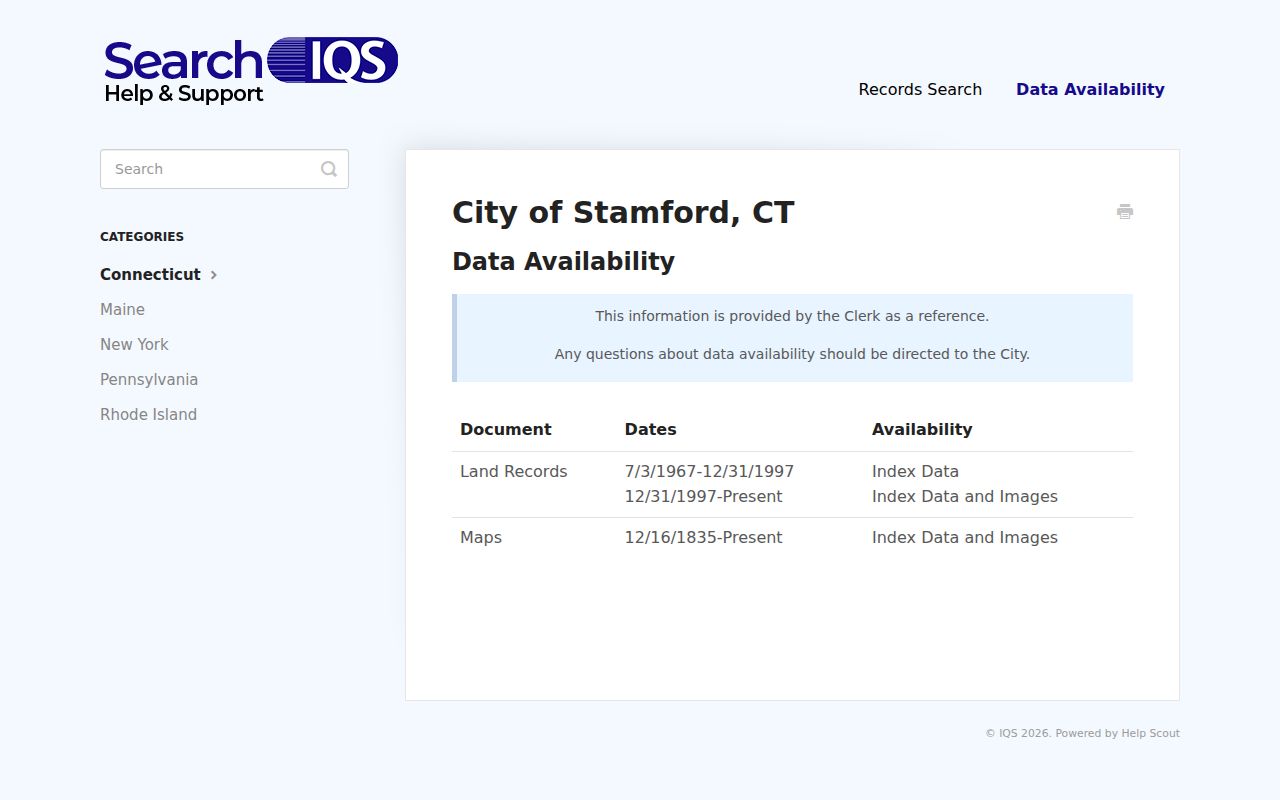
The Stamford coverage notice is the reason a backward trail must change tools instead of stopping at the first missing scan.
Note: A 1967-1997 index hit can establish a name and instrument path even when the associated image is not online.
The 1641-1900 Stamford Land Bridge
The Stamford History Center’s General Index Land Records Stamford 1641-1900 is the key pre-digital bridge. Its Marcus Research Library also holds Stamford record groups, maps, directories, and house-history material. The Stamford collection is onsite, with research requests and appointment rules described by the center. Ferguson can supply the public-library fallback through local history, microfilm, and reference staff.
FamilySearch adds a Connecticut wills-and-deeds collection with index and image coverage described as roughly the 1700s through 2017, plus Stamford town-record images from 1640-1806. Stamford images may require a free account, an affiliate library, or a FamilySearch Center. The Connecticut State Library’s genealogy guides and archives finding aids help route town, court, map, and naturalization records when a Stamford shelf is not enough.
Stamford house surveys are another access channel. The History Center lists Stamford, North Stamford, pre-1870, Glenbrook, Hubbard Heights, and West Main Street holdings. They can supply earlier owners, photographs, structural notes, and correspondence, but a Stamford survey reference is a research lead rather than a current occupancy record.
Read Boyd’s Stamford Address Clues
Boyd’s 1881-82 Fairfield County directory gives a useful lesson in how Stamford previous residents appear before modern street systems. The Stamford section begins at printed page 33. The title page says 1881-82, while Internet Archive metadata labels the scan 1883, so retain both facts and cite the printed title when dating a Stamford entry.
| h | House or home address follows the business or name entry. |
|---|---|
| n | Near a street, landmark, or intersection. |
| c | Corner of two streets. |
| opp | Opposite a named place or feature. |
| do | Repeats the immediately preceding location. |
| r | Rear, often showing a second part of the address. |
Entries such as “Abbot Le Grand, h 32 North,” “Adams Mary E, boarding, 5 Cottage, h do,” and “Anderson Nancy, widow George, h Main n Pacific” show why a name search alone is weak. A directory can place a household near a landmark, identify a widow or boarder, or link a person to a business address without proving title.
Pair Stamford Directories With Census Years
Stamford directory runs are often annual, while the federal census is decennial. Ferguson’s verified shelf reaches from 1879 through 1966, and the History Center lists 1872 plus 1879-1916 titles. Pair the two Stamford sets to bracket a move, household change, or street-name shift. The Stamford city directory collections page holds the collection-level reading details, while the address trail stays focused on one parcel.
- Read the directory abbreviation key before copying names and address marks.
- Search every person at the address, including spouses, widows, boarders, adult children, and business partners.
- Use the nearest Stamford census year to compare household members, age, birthplace, and street or enumeration-district clues.
- Check a Stamford directory before and after the census to narrow when a move occurred.
- Use an obituary, church abstract, vital record, or deed to test which name change fits.
NARA releases personal census schedules after 72 years, making 1950 the latest personal census in the research notes. The 1890 federal census loss is a national gap, not evidence that a Stamford household was absent from the record trail.
Sanborn Maps Date a Stamford Block
Stamford Sanborn fire-insurance maps show building footprints, uses, street names, parcel or block clues, and changes in the built setting. They do not identify every person who lived in a building. Stamford has a public-domain 17-sheet Sanborn set from August 1896 at the Library of Congress, a 1906 set at the History Center, and a 1929 reference in the Lost Streets material.
The Library of Congress Sanborn search guide explains how to read the map symbols and limits.
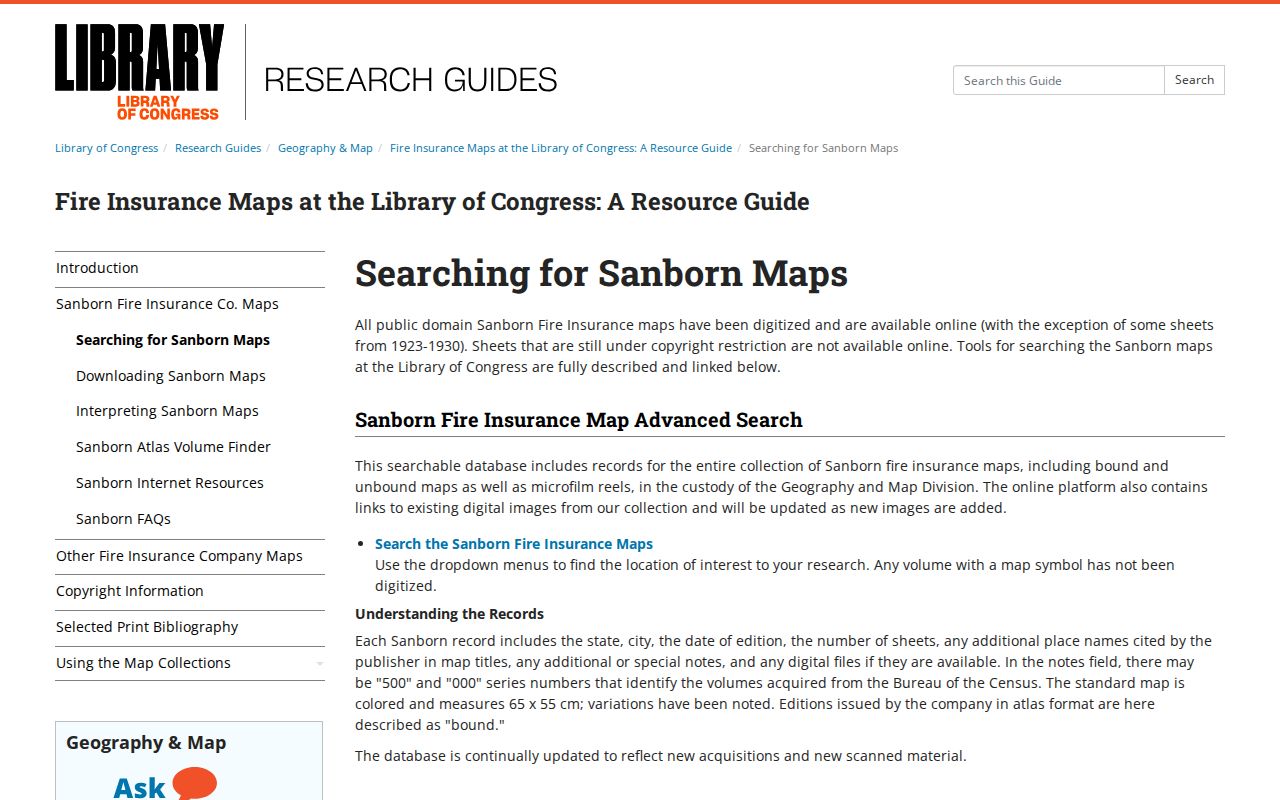
Use a Stamford map sheet to test whether an old address, building use, or street form fits the deed and directory years around it.
Renamed Streets Hide Previous Residents
Stamford downtown renewal creates a real continuity trap. The History Center says a 1949 concept led to major demolition in 1965 and changed the old street grid under the inner loop and mall. St John’s Place appears in the 1893-94 Stamford Directory and later disappeared. Meadow became Hawthorne, School became Tresser, and older Stamford clues survive for Cottage, Chapel, Holly Place, and Willow.
The Stamford Lost Streets exhibit gives the old and new names, maps, and urban-renewal context used to reconcile a previous-resident address.
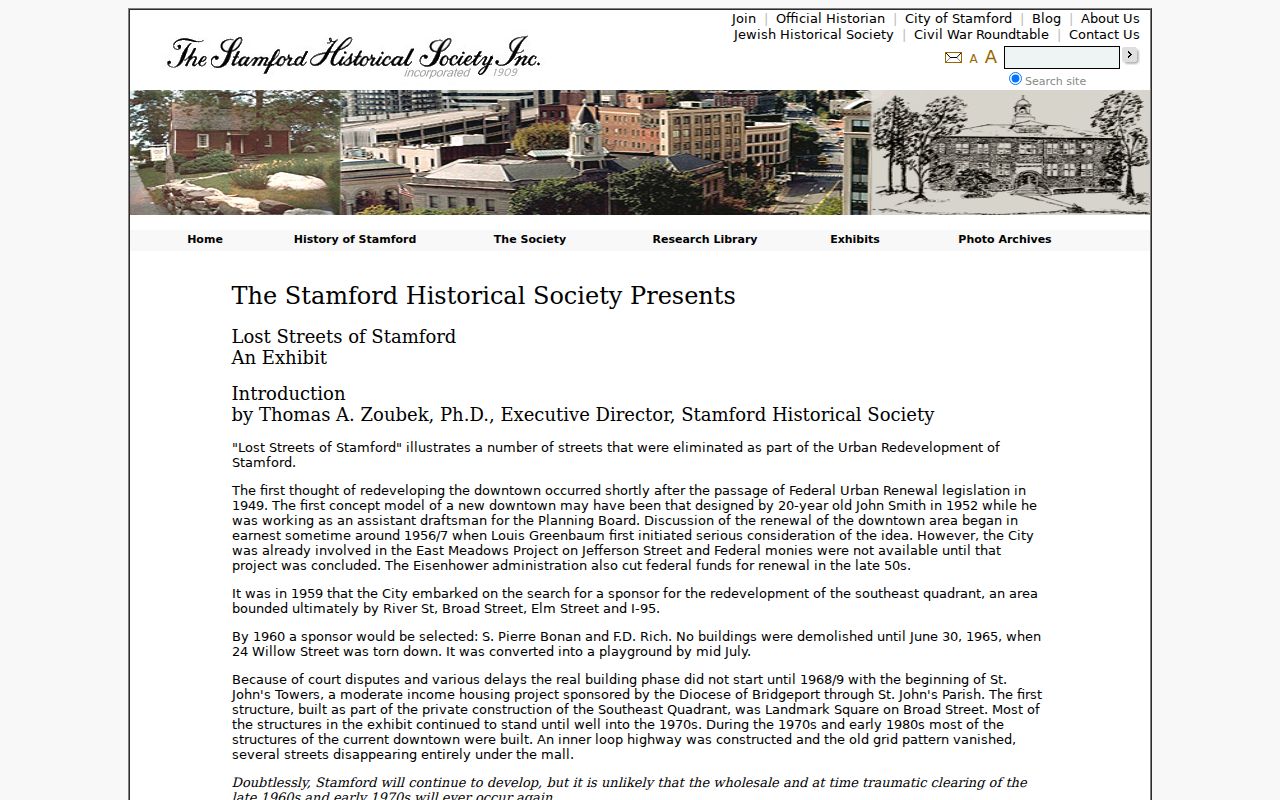
Search both Stamford names, then compare the legal parcel, map sheet, and directory year. A failed modern street search can be a naming problem rather than a missing Stamford household.
Obituary Endpoints for Stamford Previous Residents
Ferguson’s Stamford Advocate obituary index begins in 1830, and the library describes NewsBank Advocate coverage from 1829 forward. Search a former Stamford surname, street, spouse, organization, or business role. An obituary can connect a directory name to a death date, family relationship, or later town, but it still needs the Stamford address and deed context before it closes a house history.
The Ferguson Stamford newspaper obituary index is the local starting point for a dated death notice.
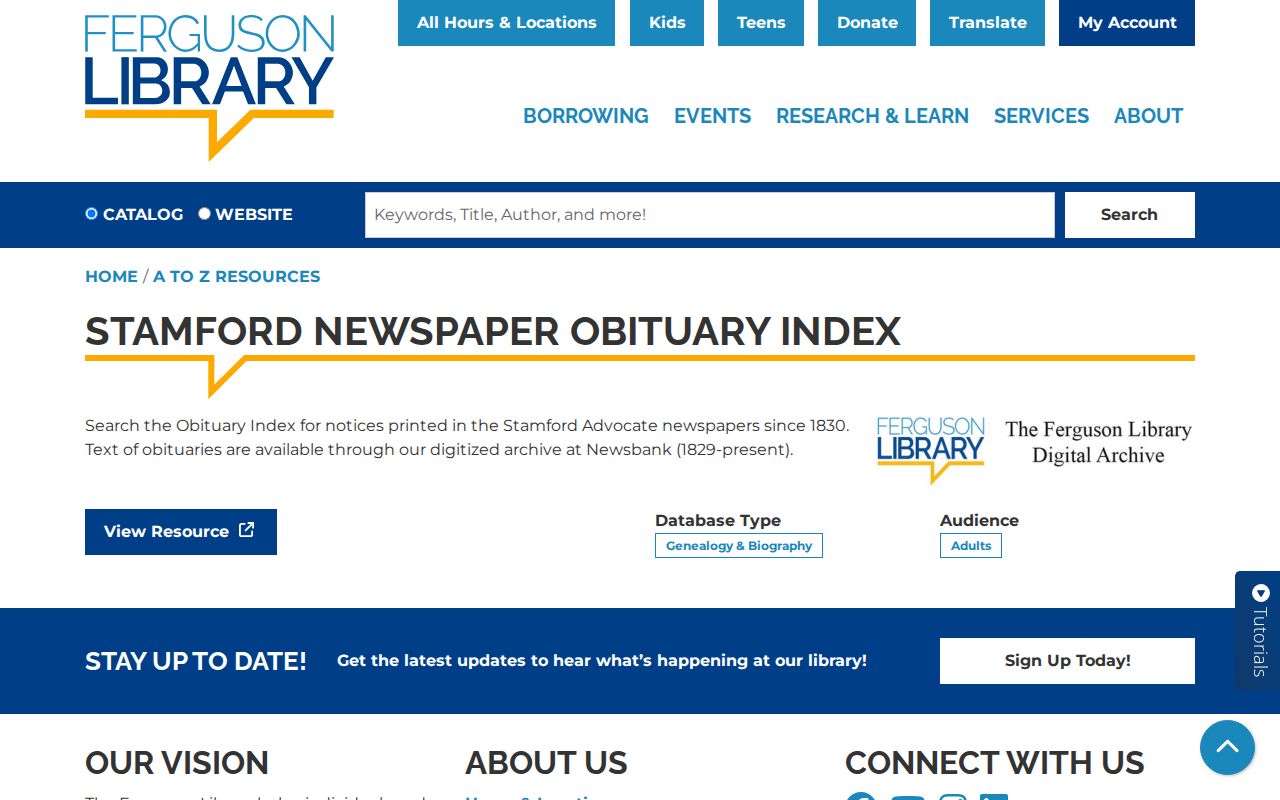
For a Stamford estate or heir clue, use the Connecticut Probate Court lookup by case type, Stamford district, status, last name, and first name, then ask the Stamford clerk for older files or copies. Probate is separate from a county recorder. The Stamford clerk route is the endpoint when an online case row is too brief.
Lawful house history. Previous residents research is appropriate for genealogy, restoration, family history, and personal curiosity. Do not use an address trail to watch, threaten, or harass a living person.
Note: A directory, deed, obituary, or probate row can support a timeline without proving that every named person occupied the address for the entire year.