
Find People Through the Stamford Residents Directory
Start with the strongest fixed point you have. An exact Stamford address opens one door after another: a parcel number, an owner of record, a deed reference, and older household clues. Those clues come from earlier directory entries. A Stamford name works the other way. It can pull up an assessor card, a voter status check, a court party entry, a probate case, or a public license. The skill is picking the record that actually answers your question. Treating every name match in a Stamford residents directory as proof of residence is a mistake. It is the fastest way to get a lookup wrong.
Gaps run through the official trail too. A property roll names an owner or a mailing recipient. It never shows every person at the address. Privacy rules shape what a voter roll will show. An old street directory entry may describe a household that moved on long ago. So read each Stamford record for its own role. Chain the sources together instead of leaning on any single one.
- Run Stamford Vision by address or owner and save the parcel ID, MBLU, mailing address, and book/page reference.
- Check the Stamford-connected Connecticut voter status route for a current registration clue, while allowing for protected records.
- Move to the Stamford land-record index when a deed, mortgage, lien, or prior owner is the next link.
- Use the Stamford library and history shelves for older residents, street spellings, obituaries, and household context.
- Ask the Stamford custodian for a focused copy or inspection when a portal stops at an index, a redaction, or a missing year.
Where Stamford Resident Records Are Kept
Fairfield County is a historical label, not a working records office. Connecticut abolished county-level recorder, assessor, and jail functions. So there is no county recorder to visit. Stamford land and vital records live with the Town Clerk. The city assessor holds the property rolls. The Registrar and the Secretary of the State keep voter records. Court and probate material moves through the state judicial system. That split is why a Stamford resident lookup must follow the record itself. Do not chase a county mailing address.
Stamford Town Clerk
888 Washington Boulevard, Ground Floor
Stamford, CT 06901
203-977-4054
Stamford Assessor and GIS
Government Center, 888 Washington Boulevard
Stamford, CT
203-977-5360
Stamford Registrar of Voters
888 Washington Boulevard, 6th Floor
Stamford, CT 06901
203-977-4011
The Stamford Assessor Card Comes First
When the clue is a Stamford address or an owner name, Stamford Vision is the cleanest first stop. The public form offers several modes: Address, Owner, Acct#, MBLU, PID, and All, plus tabs for a street listing and a sales search. Address suggestions appear after about three characters. Owner, account, and PID searches accept shorter partial entries. No account is needed for the public property search. The Stamford Vision assessor search displays the modes you use before any parcel card opens.
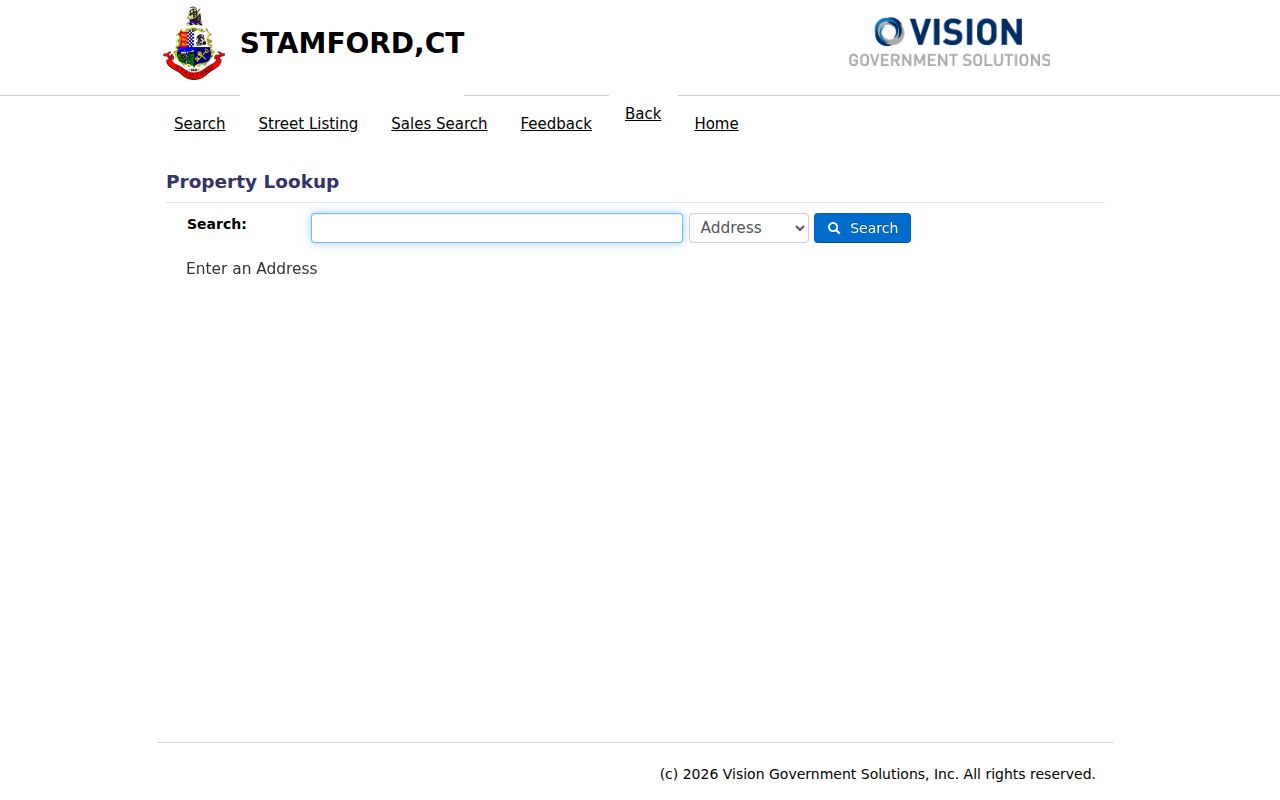
Each search leads to an assessor card. It keeps the parcel location separate from the owner mailing block. The card also hands off a book and page reference. Building and land facts, sales history, and map links come with it. Think of it as an index to the next record. It never proves the owner lives at the situs address.
| Field label | Type | Required | Options or format notes |
|---|---|---|---|
| Stamford Vision: Search | Dropdown | Yes | Address, Owner, Acct#, Mblu, PID, or All. |
| Stamford Vision: Address | Text/autocomplete | Conditional | Street and number suggestions; autocomplete activates at about three characters. |
| Stamford Vision: Owner | Text/autocomplete | Conditional | Owner last name or partial name; suggestions narrow the result. |
| Stamford Vision: Acct# | Text/autocomplete | Conditional | Account identifier, such as the displayed 003-6205 pattern. |
| Stamford Vision: Mblu | Three-part text | Conditional | Map, block, and unit fields; a displayed format is 003/6205////. |
| Stamford Vision: PID | Text | Conditional | Numeric parcel identifier. |
| Stamford Vision: Street Listing | Tab or link | Browse | Streets.aspx street browse route. |
| Stamford Vision: Sales Search | Tab or link | Browse | Sales.aspx search route. |
| SearchIQS: Party 1 | Text name | Optional | Individual last name first; partial text and the asterisk wildcard are supported. |
| SearchIQS: Party 2 | Text name | Optional | Useful for a grantor and grantee pair, spouse, or lender. |
| SearchIQS: From / Thru | Date pair | Optional | Blank dates search the available span; a blank Thru runs through today. |
| SearchIQS: Book and Page | Paired text | Optional | Use the book/page reference from an assessor card or prior instrument. |
| SearchIQS: Instrument or Case Number | Exact text | Optional | Use the number printed on the recording reference when available. |
- Roll
- A tax or assessment list that ties a parcel to an owner, value, or mailing clue.
- Index
- A name or key-based pointer to a fuller record, image, or file.
- Criss-cross directory
- A reverse directory arranged around an address or street instead of only a surname.
- Parcel
- A mapped piece of land identified by a local key such as a PID or MBLU.
Current Stamford Residents Directory Sources
Different Stamford record sets answer different questions. Treat the Stamford residents directory as a working index of leads. It is not a census of everyone in town. An assessor roll names the owner of record for a parcel. Voter records show a registration status where state law allows its release. A deed index lists the parties to a recorded land transaction. Courts, probate files, licenses, and business filings each add role-specific clues. These range from executor to licensee to registered agent.
| Source | Person or address clue | Keeper | Access and limit |
|---|---|---|---|
| Stamford Vision assessor parcel | Owner, situs, mailing address, parcel and value | Stamford Assessor | Free web search; not an occupancy affidavit. |
| Stamford SearchIQS land index | Deed parties, mortgages, liens, maps and prior references | Stamford Town Clerk | Guest or subscription paths; image and copy rules differ. |
| Stamford voter status and registry | Name, address, district, party, status and participation fields when released | SOTS and Registrar | Individual lookup; protected names and addresses are suppressed. |
| Stamford court and probate indexes | Parties, fiduciaries, heirs, case type, docket and status | Connecticut Judicial Branch | Public index with retention, sealed, erased, and restricted records. |
| eLicense and business records | Credential, entity, DBA, registered agent or filing address | Connecticut agencies and Town Clerk | Free public searches; a professional or entity address is not residence proof. |
Pick the record whose role matches the question you are actually asking. A parcel roll proves ownership, a voter file proves registration, and a deed proves a transfer happened. When the question is who is tied to one street, the Stamford street directory by address approach keeps parcel, deed, voter, and history clues in their proper order.
Stamford Voter Records and Deeds
Connecticut voter data works best as a confirmation layer. It is not a streetwide browser of current occupants. The official status route checks a registration. A separate voting-location form takes a street number and name. It finds a Stamford election place. Public registry fields can include name, residence address, district, party affiliation, active or inactive standing, and participation indicators. How someone voted stays private. For the official status route, the Connecticut voter lookup appears in the Connecticut record map.
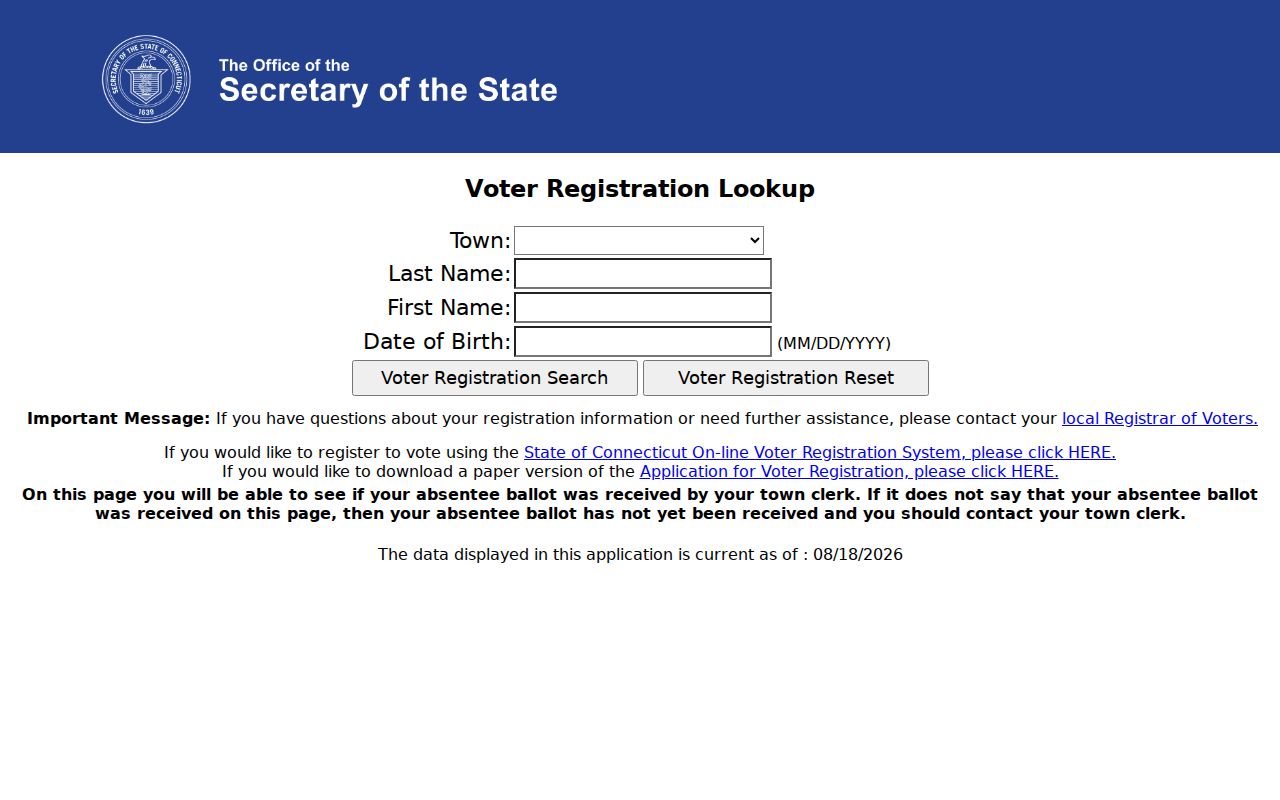
Stamford Section 9-50d shields Social Security numbers, license and identity-card data, and safety-suppressed addresses. A statewide file is a separate matter. SOTS requires a written request and lists a $300 charge through LEAD. For a specific Stamford list-maintenance question, the Registrar is the local office to ask.
Stamford deeds supply a different kind of proof. SearchIQS links a current grantee to the seller named in the next earlier deed. Land-index data reaches back to July 3, 1967. Image coverage is reported from December 31, 1997. The city page describes routine online land records as beginning in 1998. For older material, the Stamford Town Clerk vault, the historic land index, and the library fill the gaps. A focused request route covers the rest.
Stamford Court, Probate, and Vital Records
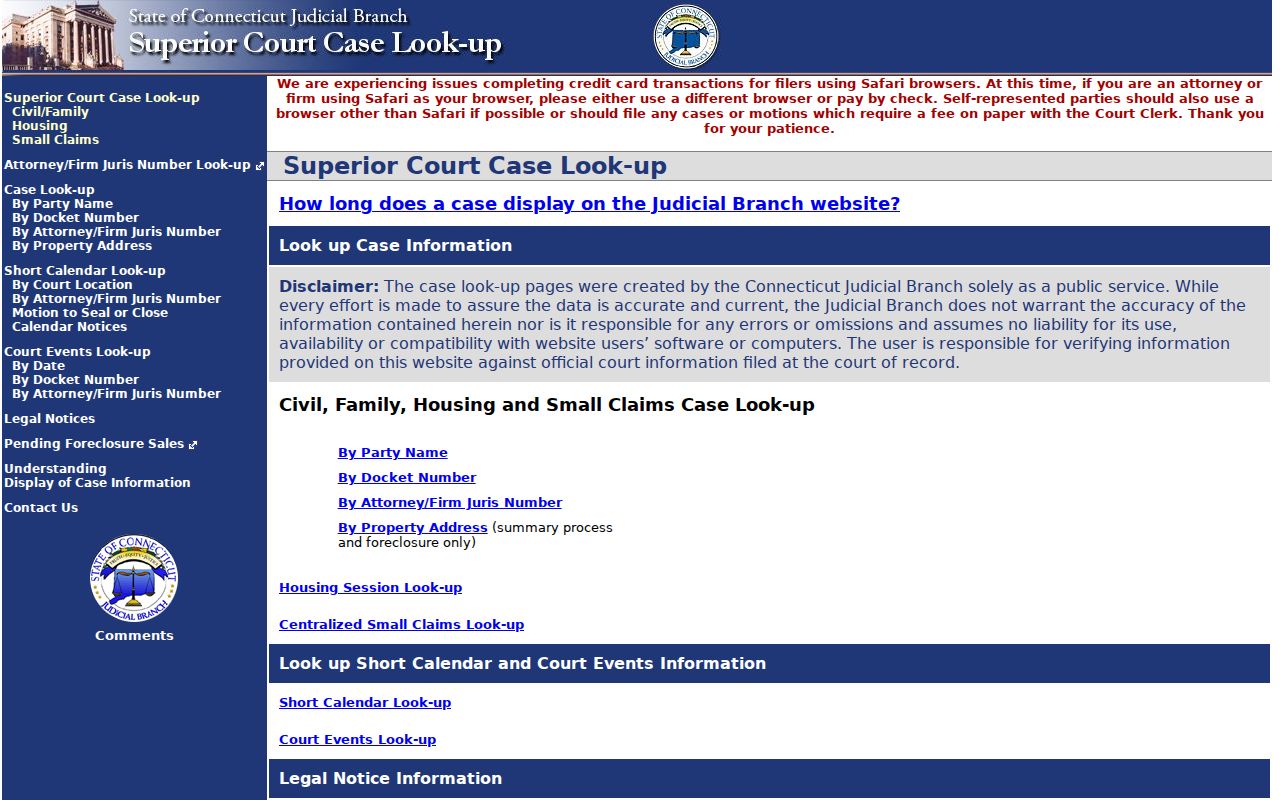
Court research gives a Stamford residents directory user several angles. The Connecticut Judicial Branch lets you search by party name, docket number, attorney or Juris number, property address, court calendar, or specific event. You can also search by a specific event type. That flexibility helps when a name alone returns too many matches. The Stamford/Norwalk Judicial District and Geographical Area 1 clerk sits at 123 Hoyt Street. Probate works separately. Stamford Probate District appears in state listings as PD53.
A result typically lists the party role, docket number, attorneys, filings, dates, and case status. Treat it as an informational case index rather than proof of where someone lives now. The Connecticut Superior Court case look-up displays the public search paths that tie a Stamford name to a court record. Each path connects a directory name to a case.
Some case types never appear in an online index. Protective orders, sealed files, and juvenile matters stay off public results. Erased cases and other restricted items stay off limits too. An estate or heir question in Stamford starts with the probate case form. When the index alone is not enough, ask the PD53 clerk to pull the actual file. Divorce decrees live at Superior Court, not Vital Records.
For births, marriages, and deaths, the split is local versus state. Stamford's Registrar keeps the local record set. The State Office of Vital Records holds every Connecticut event from July 1, 1897 forward. Access rules differ by record type. Birth and fetal-death certificates under 100 years are limited. Anyone 18 or older may buy certified marriage and death copies, subject to confidential-file and Social Security number rules. The Connecticut vital-record forms lay out the request options. They cover both the local and state routes.
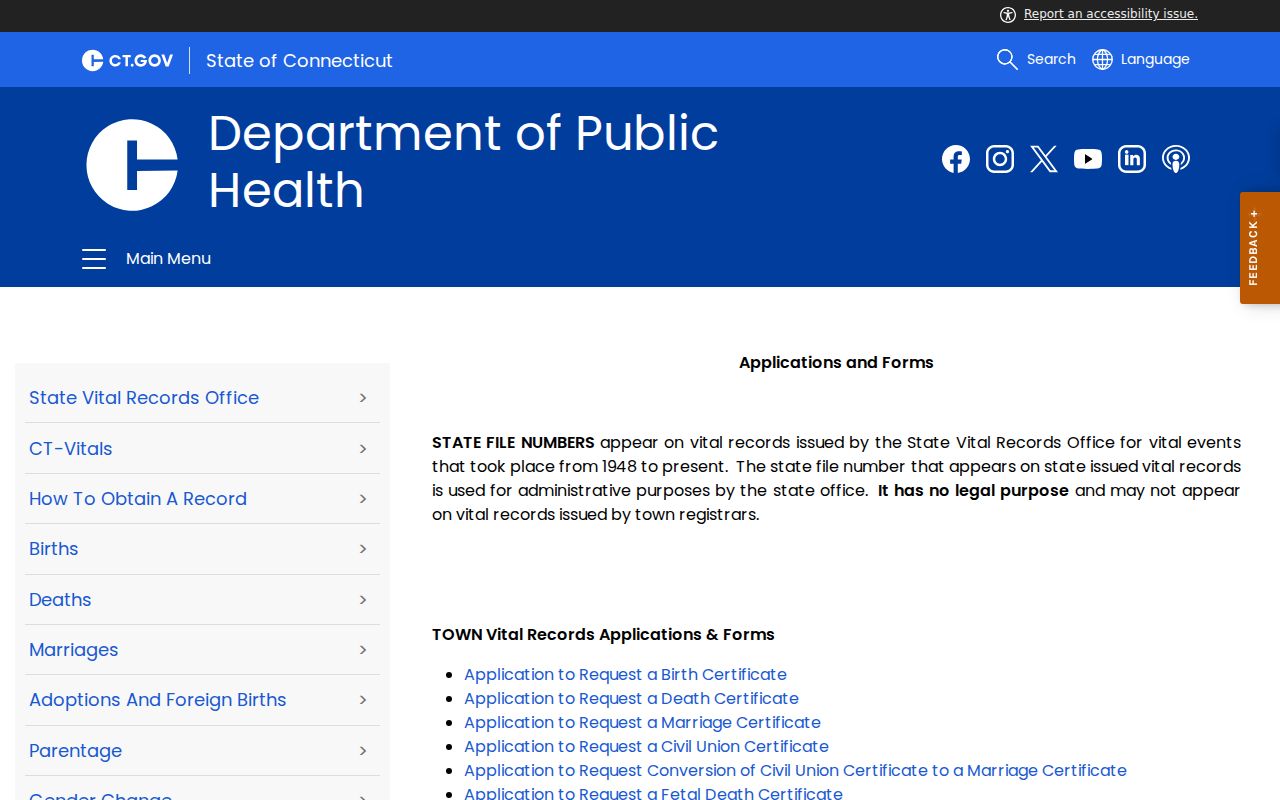
Stamford certificates can be requested three ways. Go to the counter or mail it in. You can also use the approved VitalChek route for eligible records. State mail and counter processing can stretch to 12 weeks, so plan for the wait. A certificate remains a controlled record. That means an obituary or a directory entry should stay a lead rather than a stand-in for the real document.
Unclaimed Names and Stamford Library Trails
Property sometimes loses contact with its owner. That opens another door in a Stamford name search. The Connecticut Treasurer's CTBigList is free. A result may point to an owner, a former address, or an heir connection. A claimant still has to prove ownership or heirship before anything is released. Treat the hit as a lead, not proof of identity. Keep the Stamford claim process with the Treasurer. The official Connecticut unclaimed-property search is the source for the free name route.
The Ferguson Library Stamford Room adds a deeper layer. Its holdings span old city directories, U.S. Census microfilm, vital, church, cemetery, and school material, plus maps, photographs, and city documents. The Stamford newspaper obituary index reaches back to 1830. The NewsBank Advocate archive runs from 1829 to the present. When a current Stamford name has an older street or household form, the library is a strong bridge between them.
Stamford Business and License Records
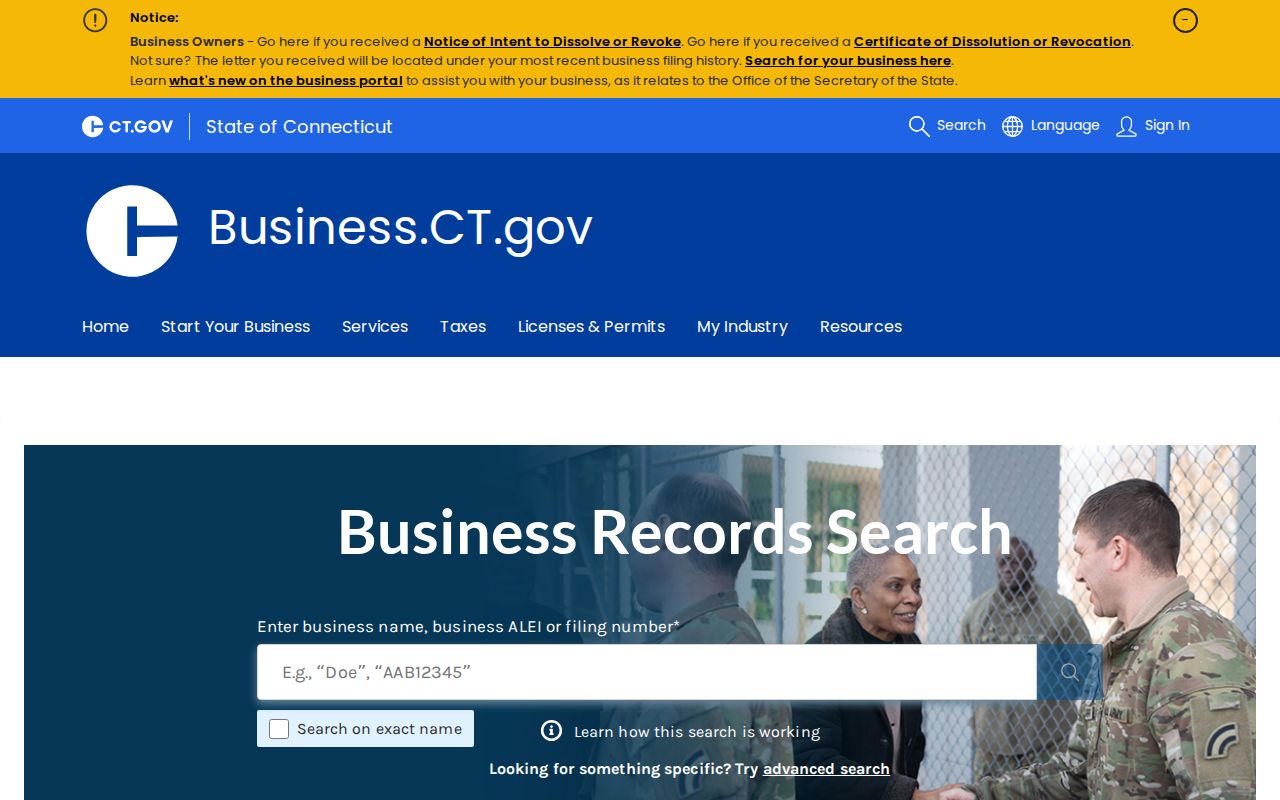
Business and credential files help separate people who share a name. The Secretary of the State business search is the statewide route. It returns entity identity, registered agent, and principal office. It also lists filing history. Stamford assumed names and trade names are filed with the Stamford Town Clerk. The Town Clerk offers no live name index. A business address or registered-agent entry is an affiliation clue only. It is not a residence finding. Weigh it accordingly. The Connecticut Business Records Search is the official state entry point for entity records.
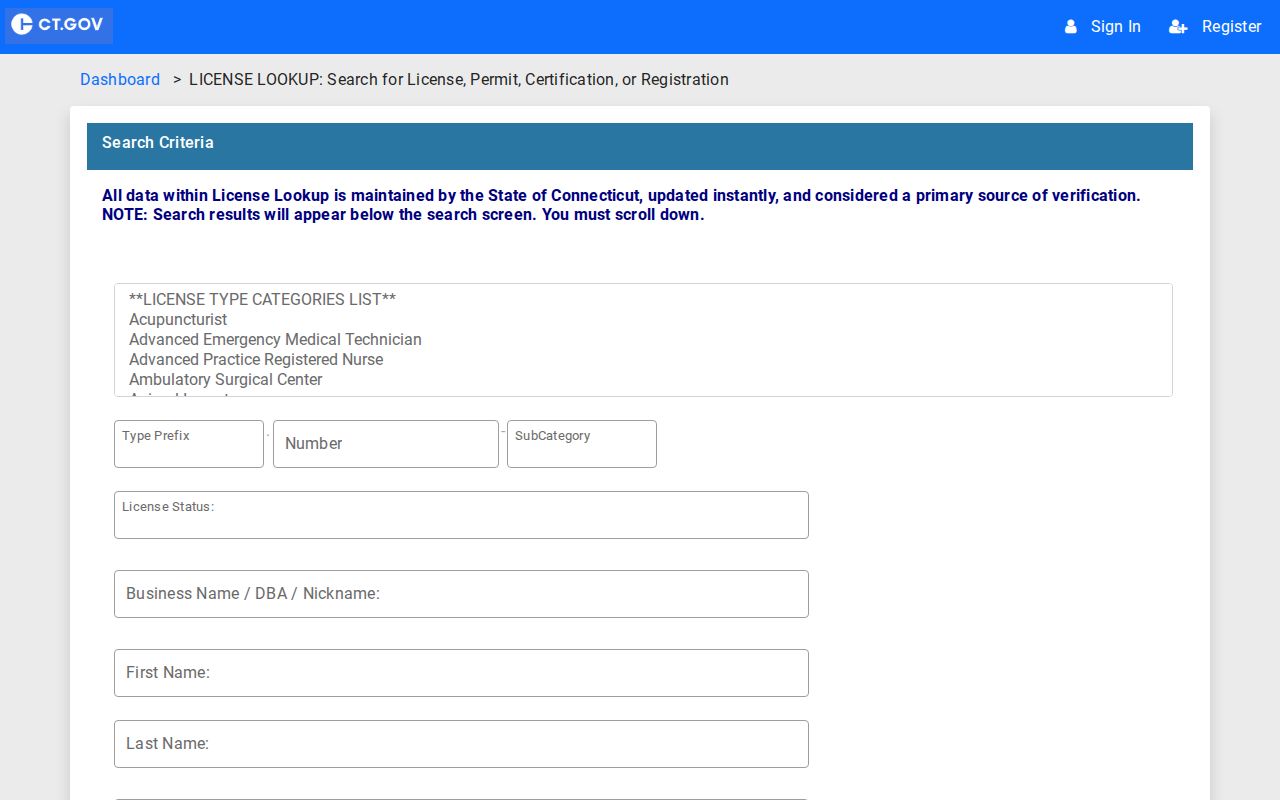
State licenses, permits, and registrations sit in eLicense. The public search is flexible. Filter by credential type, prefix, number, status, or business and DBA. You can also filter by individual name, city, state, or ZIP. A detail view may show the credential, mailing address, and effective and expiration dates. It may also list status and some discipline information. The Connecticut eLicense lookup is the direct public credential search.
Use these Stamford records to test a name variant, a date, or a public affiliation. A filing address proves a filing address. It says nothing about where a person sleeps or spends each day.
A Privacy-Safe Stamford Records Search
Connecticut's Data Privacy Act gives qualifying covered businesses rights over their data. Those rights cover access, correction, deletion, portability, and opt-out. That includes universal opt-out signals honored from January 1, 2025. They do not erase public holdings. A Stamford deed stays with its Stamford public custodian. So does an assessor card, voter record, court index, or vital record. Public agencies and several regulated data sets carry separate exemptions and access rules.
| Source family | Useful for | Read it with care |
|---|---|---|
| Stamford official custodian | Current legal, civic, court, parcel, license, or vital record | Coverage, eligibility, redaction, and update rules vary by office. |
| Stamford library or archive | Older names, streets, households, obituaries, maps, and local context | A historical entry describes its date and source, not a current person. |
| Commercial people-finder profile | A broad lead across compiled public and licensed data | Profiles may be stale, merged, incomplete, or costly; verify with the custodian. |
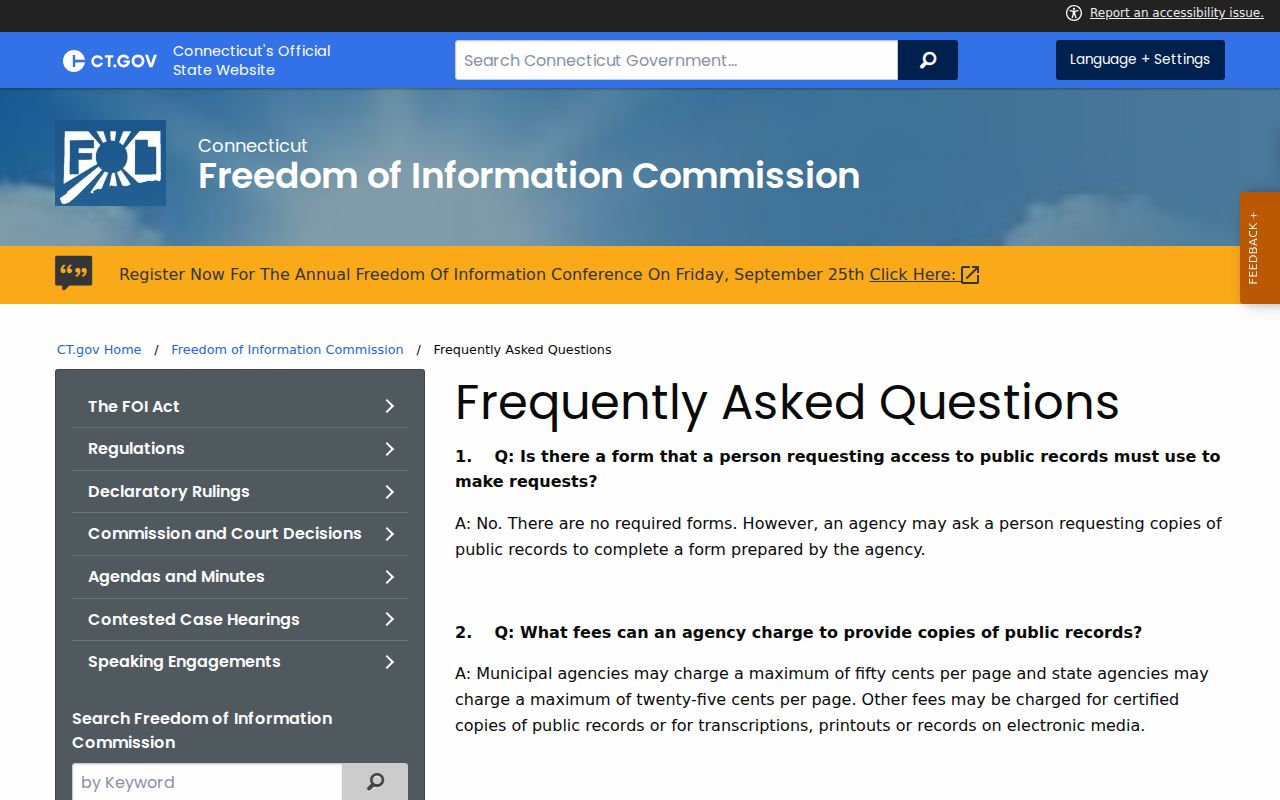
A focused Stamford Freedom of Information request should name the office and record class. It should also state the date range, address, parcel, or field you need. Precision speeds the response. The Connecticut FOI guidance explains inspection, copies, prompt access, written denials, and appeal timing. A request cannot override a closed birth certificate. Nor can it reach a protected voter address, a sealed case, or a confidential parentage record.
Keep the source date and the reason for each Stamford match. That habit makes the record search easy to correct when records change or a same-name result falls apart.
Lawful personal use. Stamford public records may support family history, civic research, estate work, and ordinary personal verification. Do not use a name or address trail to stalk, harass, intimidate, or harm another person.
Historical Stamford Residents Directory Collections
Stamford's historical resident trail spreads across directory years. It also spreads across library microfilm, local history files, newspapers, and maps. A Stamford residents directory search for a past household works best when those layers are paired. Treat them as one shelf, not one master roll. J. C. Benham's 1872 directory is the earliest verified city-specific item in the local bibliography. The Stamford History Center lists directories from 1879 through 1916. Ferguson's collection policy extends city-directory microfilm through 1966. Boyd's 1881-82 Fairfield County volume carries a printed Stamford section starting at page 33.
Old entries take practice. They use initials, spouse or widow marks, occupations, "near" descriptions, and street landmarks. Downtown continuity matters too: Hawthorne was Meadow, Tresser was School, and St. John's Place shows up in the 1893/94 directory before urban renewal redrew the street grid. The fuller shelf and the method for reading entries sit with the Stamford city directories collections. That shelf holds the whole set.
Stamford’s Layered Record History
Old civic labels live everywhere in Stamford records. Town, ward, village, and neighborhood names still surface in deeds, maps, and lists. The boundaries themselves faded long ago. English settlement began in 1641. The 1640 Rippowam and Shippan land transaction had opened the written record one year earlier. The History Center holds a general land index spanning 1641 to 1900. Modern land research works differently. The 1967 index start and the later image layer split the searching. A single parcel can demand several tools at once. A researcher may need a town book, a state portal, a library reel, and a map. Only then does the name trail feel complete.
The 1893 city charter complicated things further. It covered only the southern portion. Everyone else stayed a town resident paying taxes to both governments until 1949. That dual structure explains a lot. Stamford directories, minutes, maps, and land books do not always share the same civic label. Glenbrook, Springdale, Shippan, the coastal core, and the northern roads each left their own address clues. Any thorough Stamford residents directory search has to account for all of them.
Stamford Records Are Still Being Digitized
Digitization in Stamford is a work in progress, and the paper trail says so plainly. The adopted capital book lists a Town Clerk project to digitize land records. It also lists a Ferguson Library project for local-document digitization and preservation. A Stamford record can sit safely in a vault or a finding aid. Its online image simply does not exist yet. Keep the old index reference. A book and page, map, or reel citation still leads somewhere even when a portal comes back blank.
A February 2026 warning from Stamford Land Use shows why the source of a message matters. Fraudulent notices borrowed real project details and pushed wire payment. The city does not request wire transfers. Official zoning payments run through the city's OpenGov application. Specified board applications use checks instead. Confirm any record or payment path with the named Stamford custodian before money or personal documents change hands.